

What is being done in Durham?
Impacts of Flooding
While flooding is a natural process, it can become hazardous when people, property, and natural systems are exposed. Flooding can impact many facets of our community, and the damage can be felt long after the water has receded.

Human Health and Well-being - like drowning, injuries, long term health impacts from mold, stress and long term mental health impacts, displacement from home, loss of livelihood, and disruption to critical services like emergency services, clean drinking water, and transportation routes.

Economic - like direct damage and loss of buildings, infrastructure and other assets, the cost of emergency response, losses due to disruption.

Environment - like death and injury of animals, destruction of habitats, contamination.
Although these impacts can be distressing to imagine in your own community, it is important to remember that there are steps we can take to reduce impacts. Check out Get Flood Ready for more information.
"Flooding is considered the most significant natural hazard in Ontario in terms of death, damage and civil disruption and is the costliest type of natural disaster in Canada in terms of property damage. The most severe flooding on record with respect to loss of life in Ontario occurred in October 1954 when Hurricane Hazel passed over the Toronto area. Eighty-one lives were lost and the cost of damage is estimated to be upwards of $1 billion (in current dollars)."- Protecting People and Property: Ontario’s Flooding Strategy
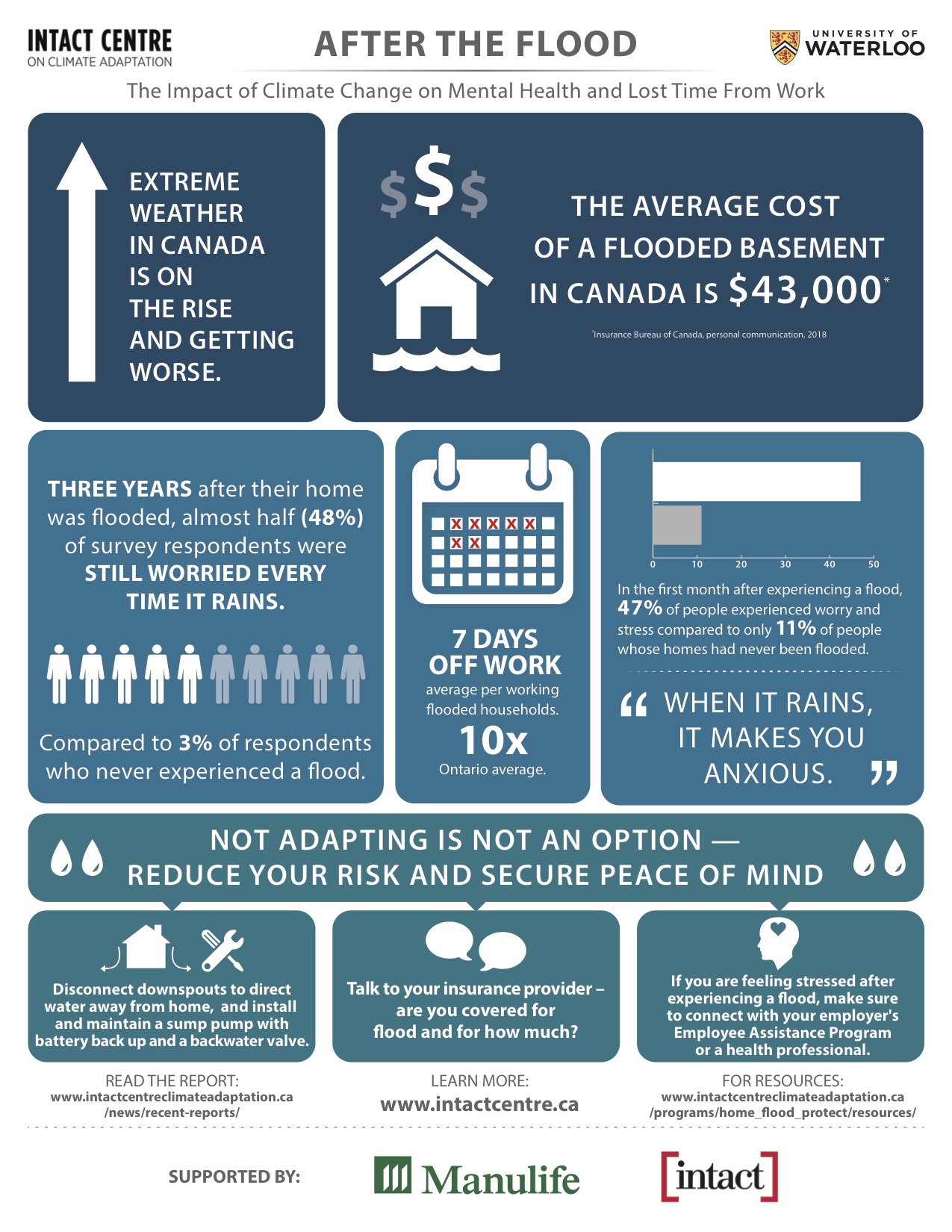
You can learn more about the impacts of climate change on mental health from the Intact Centre on Climate Adaptation.
Sign up to our Newsletter
Stay up to date on the Region's activities, events, programs and operations by subscribing to our eNewsletters.